


Have you ever signed a lease, bought a coffee, or—heaven forbid—accidentally backed into your neighbor's mailbox? If so, you’ve danced the tango with Civil Law. Unlike criminal law, which deals with offenses against society, civil law is the invisible glue that holds our private interactions together.
Think of Civil Law as the "people's court." It handles disputes between individuals, organizations, or a mix of both. The goal isn't punishment (no jail time here!), but rather compensation or resolution. If you are the one bringing the complaint, you are the plaintiff. If you are the one being accused, you are the defendant.
The standard of proof is also fascinatingly different. In criminal court, you need proof "beyond a reasonable doubt" (like 99% sure). In civil court? You just need a "preponderance of evidence"—basically, 51%. If it's more likely than not that you did it, you're liable!
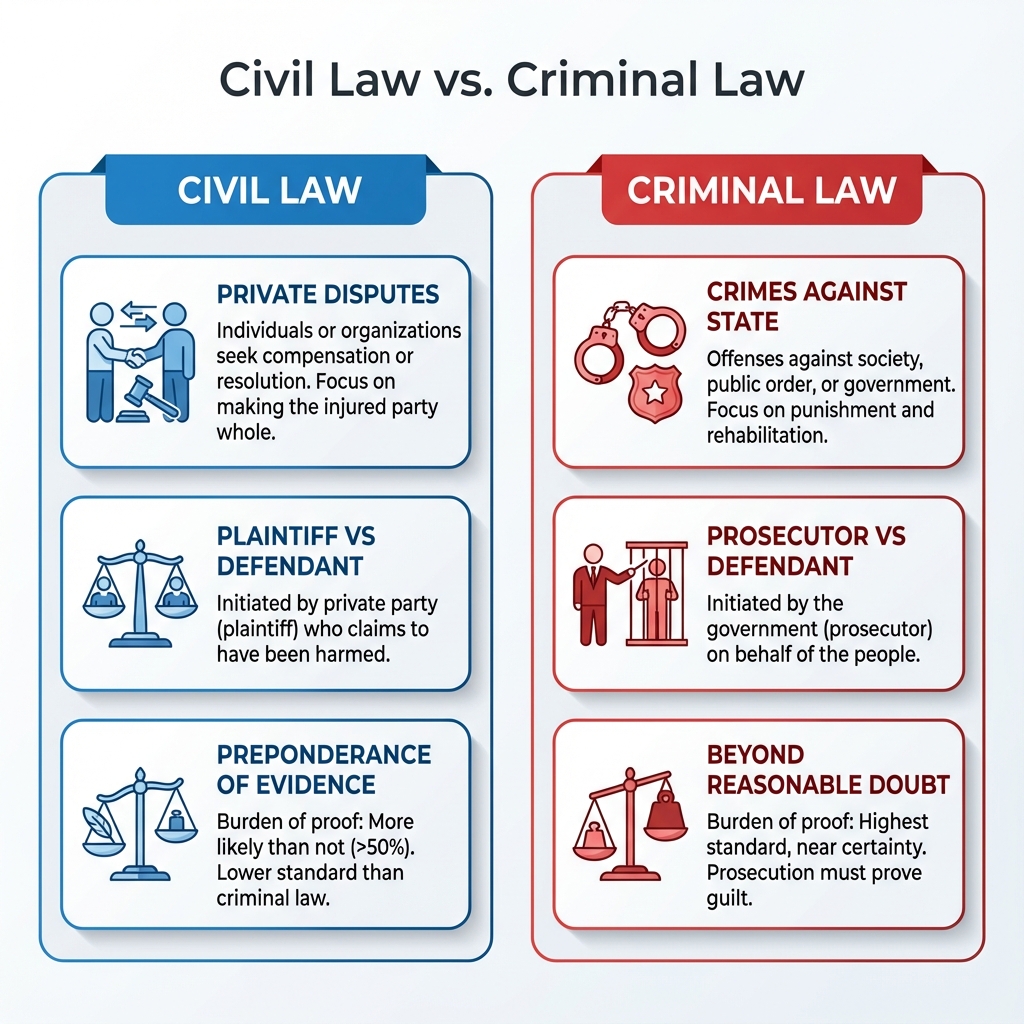
A quick cheat sheet: Don't bring a criminal defense to a civil lawsuit!
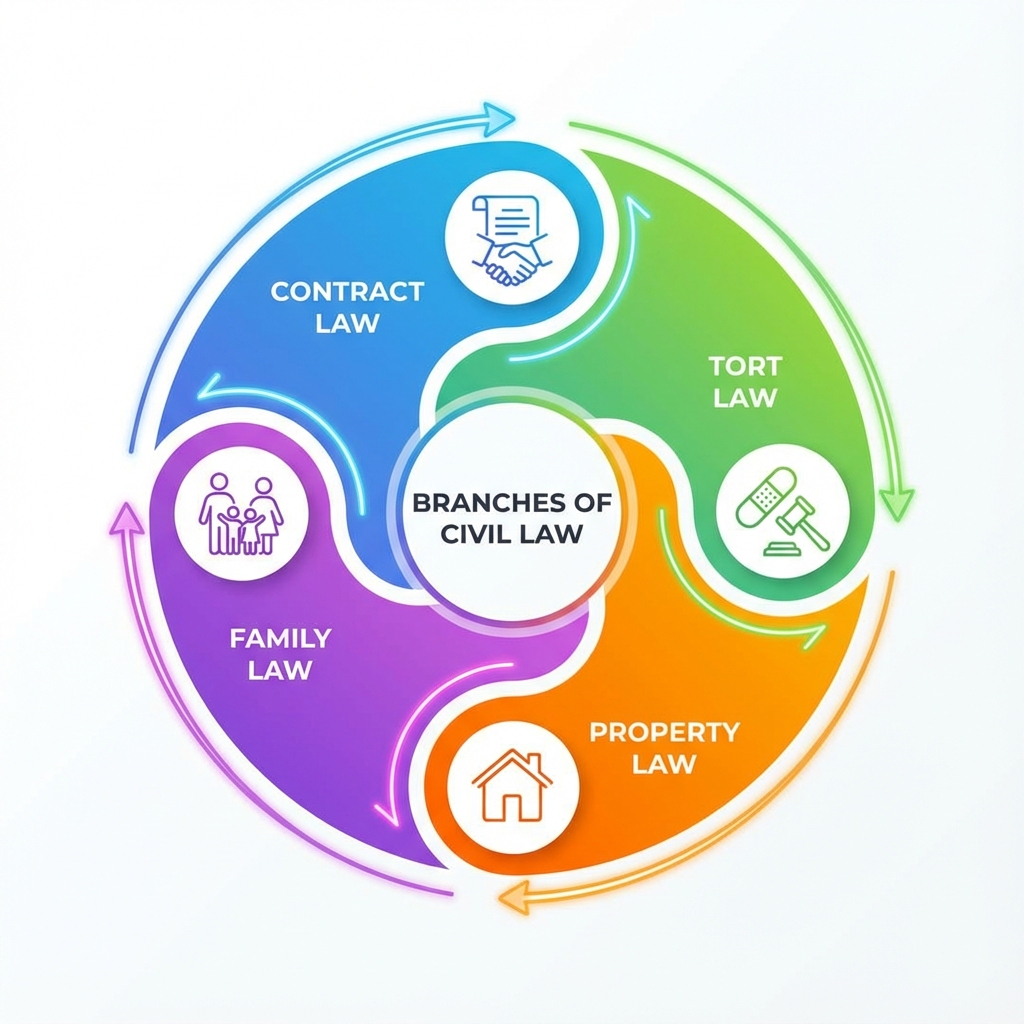
Civil law is a giant umbrella covering many aspects of daily life. Here are the four biggest players you likely encounter:
This rules everything around agreements. From your Netflix subscription to buying a house. If you promise to pay and don't, or they promise to deliver and don't—that's a breach of contract.
This is the land of "oops" and "ouch." If someone's negligence (carelessness) hurts you or your property, tort law helps you get paid for the damages. Slip and fall cases live here.
Who owns what? Can you build a fence there? Property law covers real estate (land/houses) and personal property (your car, your phone, your dog).
The emotional roller coaster. Divorce, child custody, adoption, and marriage. It deals with the legal side of family relationships.
Did you know our modern civil law systems owe a huge debt to the Romans? The Justinian Code (Corpus Juris Civilis), compiled in the 6th century AD by Emperor Justinian, is the great-grandparent of the legal codes used in most of Europe and South America today. Even Napoleon was a fan—he created the Napoleonic Code based on it!
So, the next time you sign a receipt or agree to Terms and Conditions without reading them (we all do it!), take a second to appreciate the thousands of years of legal history making sure that agreement actually means something.


Bringing clarity to the complex world of law. Helping you understand your rights and responsibilities one post at a time.
