


Family law is a branch of law that deals with matters relating to family relationships, such as marriage, divorce, child custody, adoption, and other related issues. It governs the legal responsibilities between individuals who are connected by blood, marriage, or adoption. Family law is unique because it often involves deeply personal and emotional issues, requiring sensitivity and a thorough understanding of both legal principles and human relationships.

Professional family law consultation
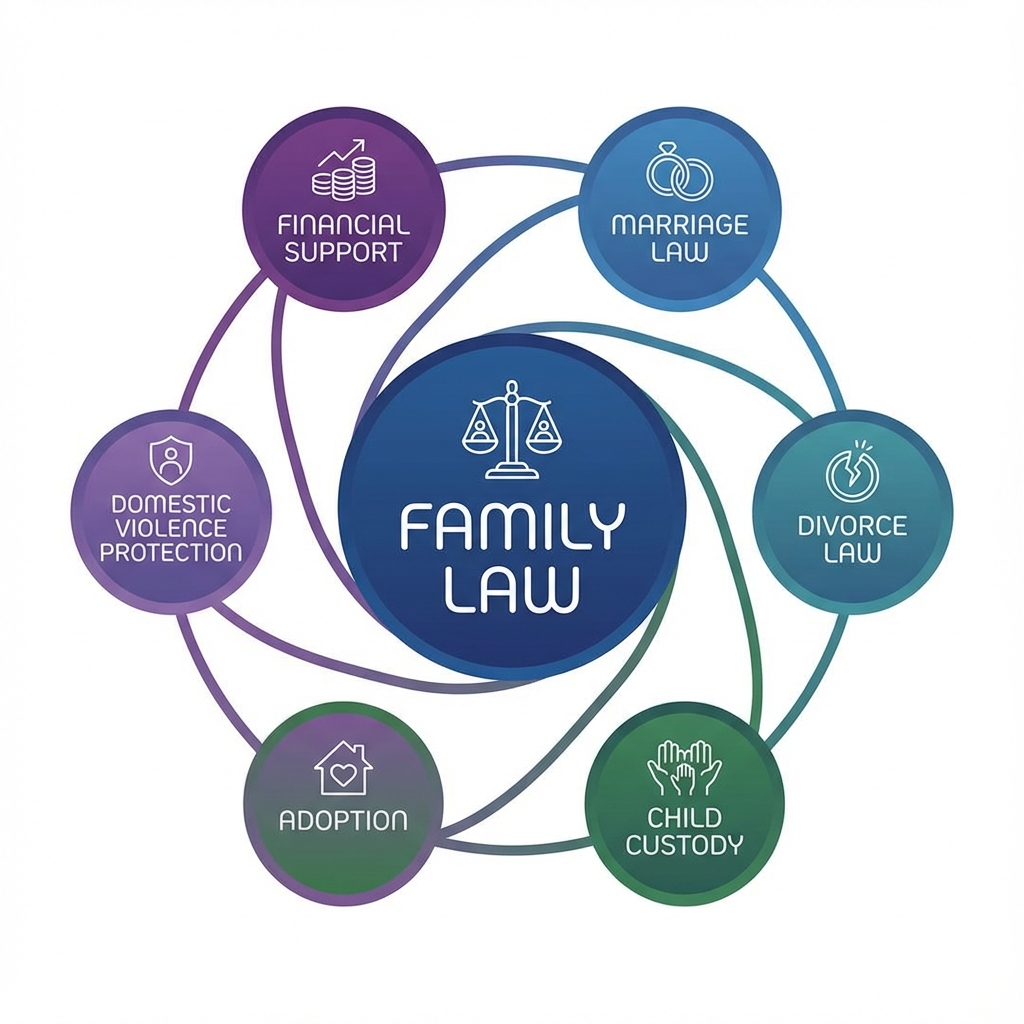
The interconnected areas of family law
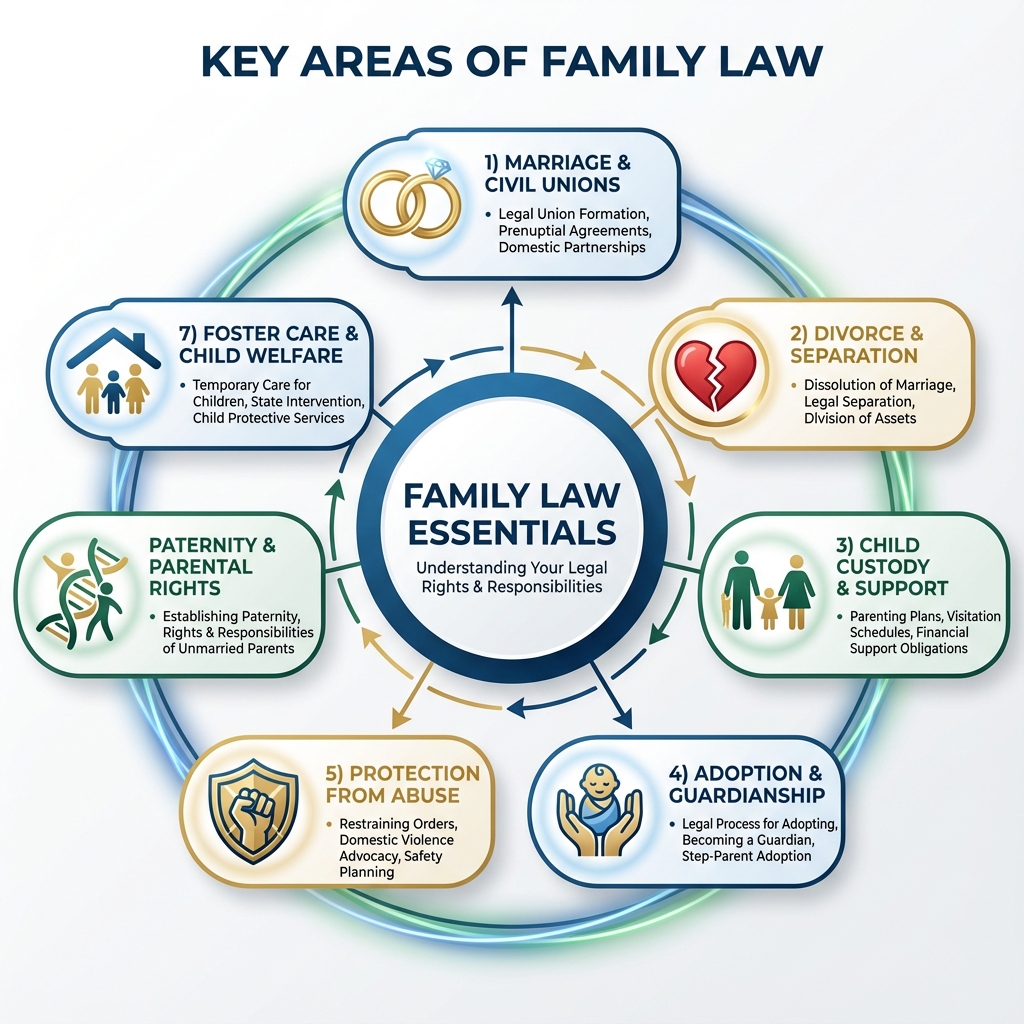
The seven key areas of family law

Legal documentation process
Divorce is one of the most common reasons people interact with the family law system. The process typically begins with one spouse filing a petition for divorce. Key steps include:
Child custody and family mediation
When parents separate, determining child custody is often the most contentious issue. Courts use the "best interests of the child" standard, considering factors such as:

Justice and legal proceedings
Adoption is a legal process that creates a permanent parent-child relationship between individuals not biologically related. Types of adoption include:
Legal protection and safety measures
Family law provides critical protections for victims of domestic violence. Courts can issue restraining orders to keep abusers away from victims and their children. Violating these orders can result in arrest and criminal charges. Many jurisdictions offer emergency shelters, counseling, and legal aid for those affected by family violence.

Financial support calculations
Financial support is a key aspect of family law. Child support ensures that both parents contribute to the child's upbringing, based on income and the needs of the child. Spousal support (alimony) may be awarded to help a lower-earning spouse maintain a reasonable standard of living after divorce. Courts use formulas and guidelines, but also consider factors like the length of the marriage and each spouse's earning capacity.

International legal matters and jurisdiction
Globalization has increased the complexity of family law, especially when families move across borders. International treaties, such as the Hague Convention on International Child Abduction, help resolve disputes when one parent takes a child to another country without consent. International adoption and recognition of foreign marriages and divorces are also important topics in modern family law.
Family law ensures that the rights and responsibilities of family members are protected and clearly defined. It provides a legal framework for resolving disputes and safeguarding the welfare of children and vulnerable individuals. By balancing the interests of all parties, family law helps maintain social order and promotes the well-being of families and society as a whole.
Whether dealing with marriage, divorce, or child custody, family law plays a crucial role in maintaining order and fairness within families. If you are facing a family law issue, consulting with a qualified legal professional is always recommended. Family law is constantly evolving to reflect changes in society, technology, and cultural norms, making it a dynamic and vital area of the legal system.