

They turn off their transponders. They paint over their names. They sail under flags of convenience. Welcome to the world of the Shadow Fleet—a massive armada of hundreds of oil tankers operating in the grey zones of international law.
The "Shadow Fleet" (or dark fleet) refers to a growing number of older, often poorly maintained vessels that are used to transport sanctioned oil—primarily from Russia, Iran, and Venezuela—while evading Western price caps and embargoes. These ships often operate with opaque ownership structures, making it nearly impossible to hold anyone accountable if disaster strikes.
But why is this a legal nightmare? Let's look at the map of their typical routes:
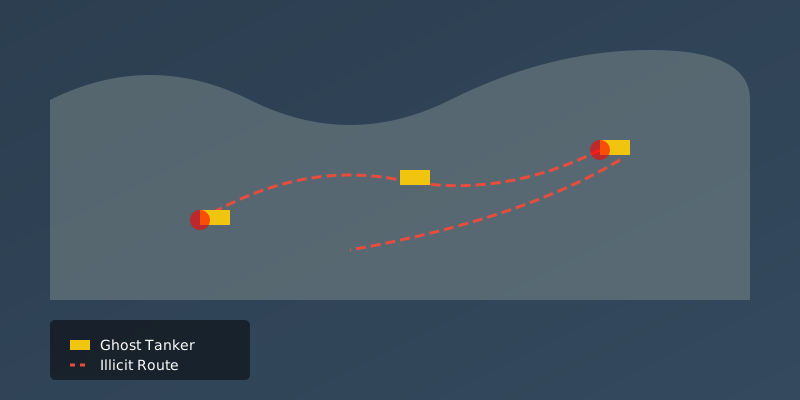
As our infographic shows, these vessels operate in high-traffic zones, often engaging in dangerous "ship-to-ship" (STS) transfers in open waters to disguise the origin of their cargo. From a legal perspective, this is a ticking time bomb.
One of the biggest hurdles in international maritime law is the "Flag of Convenience" system. A ship might be owned by a shell company in Hong Kong, managed in Dubai, but fly the flag of Cameroon or Gabon. Under the UN Convention on the Law of the Sea (UNCLOS), the "flag state" is responsible for enforcing safety standards. But when the flag state lacks the resources or will to enforce them, these ships operate with virtually no oversight.
Here's the scariest part: most major insurance clubs (P&I Clubs) abide by Western sanctions and won't cover these vessels. This means if a shadow fleet tanker crashes and causes a massive oil spill, there is zero insurance money to pay for the cleanup.
Coastal states are left vulnerable. Who pays the billions in damages? In legal terms, the claimant is often chasing a ghost—a single-ship company with no assets other than the sunken rusty hull itself.
International regulators are scrambling to catch up. The EU and UK are trying to ban the sale of old tankers to unknown buyers, and port authorities are detaining suspicious vessels more frequently. But the ocean is vast, and the Shadow Fleet is growing faster than the law can adapt.
So next time you look out at the horizon, remember: not all ships want to be seen. And in the world of international law, visibility is everything.


Amanda is a legal correspondent specializing in maritime and international law. She loves uncovering the hidden stories of the high seas.